Traffic congestion and urban planning: what a new ETH study found
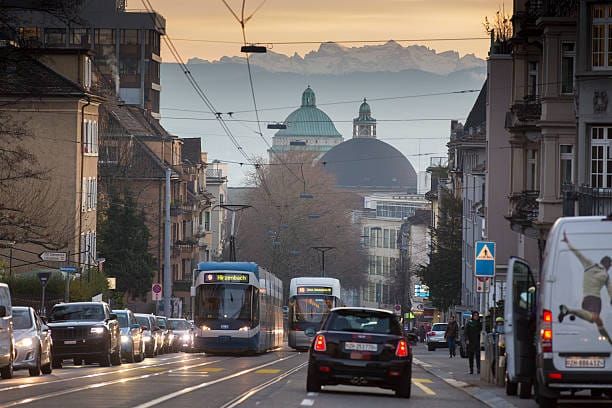
A study by ETH Zürich, published in the journal Nature Communications, has looked at what actually causes traffic congestion in cities — and found that road infrastructure is only part of the answer. The spatial organisation of a city plays an equally important role.
Researchers examined data on traffic flows, street networks, and land use across 30 major cities around the world, including Zürich and Singapore. Their central finding is that cities with a clear separation between residential and commercial areas tend to generate more traffic, because residents are forced into longer daily commutes. Cities with more mixed-use neighbourhoods, where housing and workplaces are closer together, show lower traffic volumes overall.
Zürich fares better than many of the cities studied. The relatively even distribution of housing across the canton means the relationship between city layout and commuter traffic is less pronounced here than in cities with more rigid zoning.
The researchers suggest the findings could have practical applications for urban and transport planning. If the traffic consequences of new developments can be estimated more accurately beforehand, planners would be better placed to make decisions that account for long-term mobility impacts — rather than addressing congestion after it has already taken hold.