The Langstrasse Car Ban Generated CHF 4.5 Million in Fines in Four Months (Kreis 4)
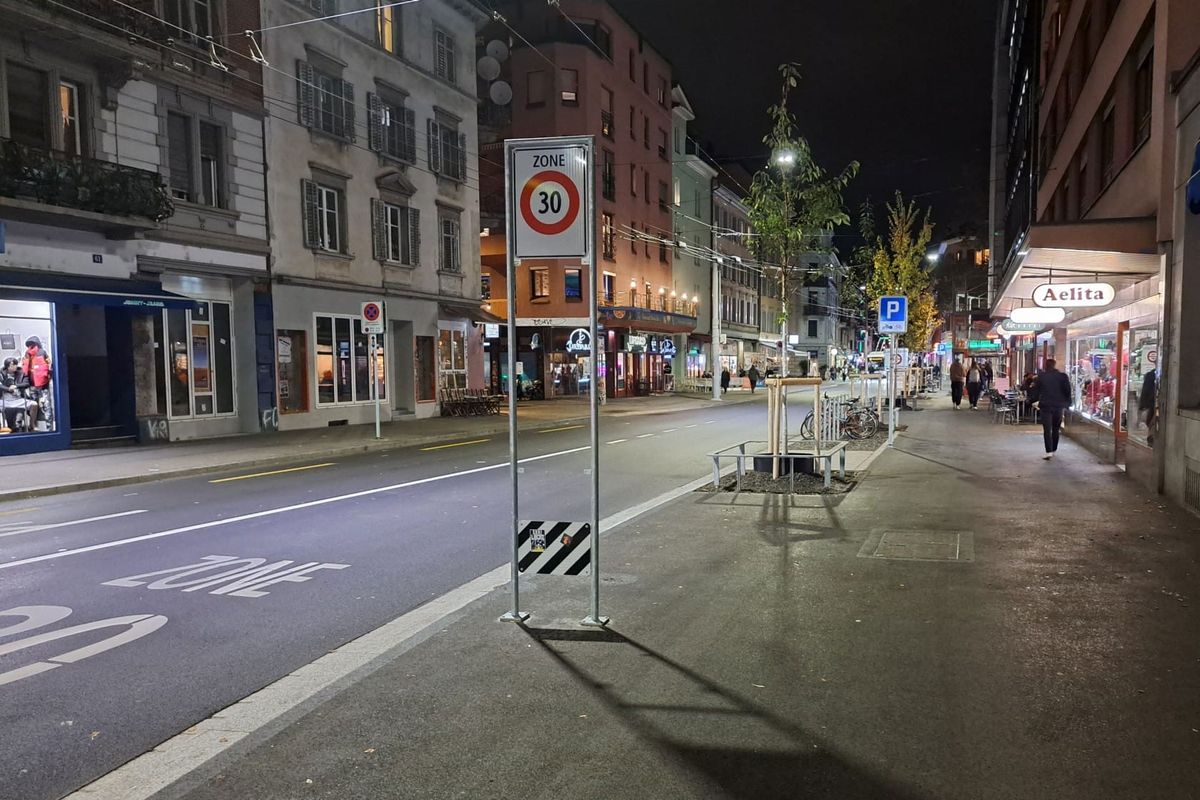
How a 60-metre stretch of Langstrasse became Zürich's most lucrative speed trap
In September 2023, the City of Zürich quietly introduced a daytime traffic ban on a 60-metre section of Langstrasse between Brauer- and Dienerstrasse, as part of its "car-reduced Langstrasse" initiative. What followed was one of the more embarrassing episodes in recent Zürich traffic management history — and an accidental lesson in how not to introduce a new road rule.
The ban was largely ignored from the start. Manual police checks in late 2023 confirmed the problem, with officers issuing 62 fines in a single two-hour shift on one November morning alone. In January 2024, the city installed an automated number plate recognition camera to enforce the rule around the clock. The results were spectacular. In that first month alone, 17,310 drivers triggered the camera and received CHF 100 fines each — generating CHF 1.73 million for the city treasury in a single month. By the end of April 2024, the camera had collected CHF 5.3 million across five months, with up to 500 violations recorded on single days. For context, the entire city's annual revenue from traffic fines typically runs around CHF 60 million. One device, on one 60-metre stretch, was generating close to 10 percent of that total on its own.
The Problem Was the Sign
Politicians across the spectrum started asking uncomfortable questions. Both GLP and SP councillors argued publicly that the scale of fines was not evidence of mass lawbreaking — it was evidence that the signage was inadequate. The prohibition applied only between 05:30 and 22:00, but the sign indicating it was static, easily obscured by a passing bus, and visible only when drivers were already committed to the manoeuvre. The city's own security department spokesperson acknowledged the issue, noting that for some drivers the ban was "simply not recognisable" in certain situations.
By June 2024, facing growing political pressure, the city switched off the enforcement camera entirely. The fines stopped. The ban remained — just without anyone checking it. The city said it was "observing the situation" and would consider further measures if violations increased without enforcement.
Those further measures materialised in January 2026, when the city installed a new illuminated variable signal — the kind familiar from motorway gantries — at a cost of CHF 360,000. The sign now shows the prohibition only during the hours it actually applies, switching off at night. It is larger, lit, and impossible to attribute to signage failure.
The arithmetic is not lost on anyone. The city collected over CHF 5 million in fines from a sign that was demonstrably confusing, then spent CHF 360,000 fixing the confusion. Whether the new signal will finally bring voluntary compliance — and whether the enforcement camera will return if it does not — remains to be seen.