The Manegg Eviction: Ten Groups, One Deadline, and Nowhere to Go
A cluster of community organisations built their work around a set of temporary industrial spaces in south Zürich. This summer, they all have to leave. Most have no idea where.
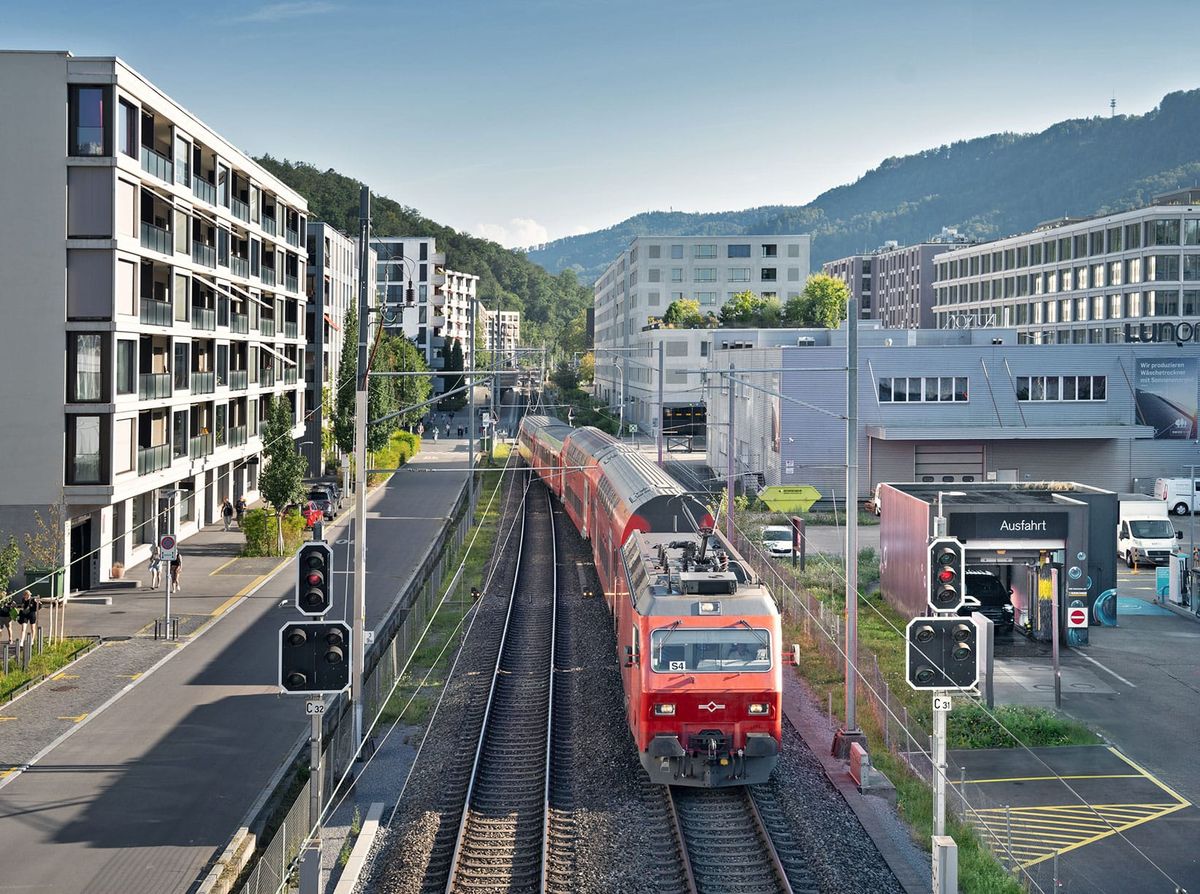
For the past several years, a collection of former industrial halls in Zürich's Manegg district has quietly become one of the city's more interesting corners. Ten organisations — ranging from a food redistribution network serving people in poverty to cultural and creative groups — took root in the old factory buildings on Allmendstrasse, operating under temporary lease arrangements that were always understood to have an end date. That date is now arriving, and the picture is messier than anyone had prepared for.
All ten tenants must vacate by the end of June. The buildings are earmarked for demolition in autumn to make way for the new Schulhaus Höckler, a CHF 141 million primary school project that the city's residents will vote on at the ballot box on 14 June — a vote whose outcome has not yet been determined. Construction is not expected to begin until early 2028 at the earliest.
That gap — between the mandated departure of existing tenants this summer and the actual start of building works almost two years later — is where the frustration is concentrated. Several of the affected organisations have asked publicly why they are being moved on now, when the site will in all likelihood sit vacant for the better part of a year before a single brick is laid. The city's social department has responded that the spaces were always advertised as temporary, and that its planning schedule stands regardless. For those doing the packing, that answer has not landed well.
What Is Actually at Stake
The Manegg complex has housed the kind of work that rarely finds a home in a city as expensive as Zürich. One of the more prominent tenants, the association "Essen für alle," has spent five years distributing food to people in poverty from the site — a function it will be relocating to Holzerhurd in late May, making it one of the few groups with a confirmed plan B. Others are in a considerably more precarious position, actively searching for alternatives in a city where non-commercial space is, by most accounts, chronically scarce.
SP members of the city parliament have now formally called on the administration to take an active role in helping the displaced groups find alternative premises — rather than leaving each organisation to navigate the market alone. Councillor Maya Kägi Götz has also pushed for transparency on the timeline, noting that an extended gap between eviction and construction would be difficult to justify publicly, and that allowing the buildings to stand empty while community groups scramble for space would send entirely the wrong signal.
There is an additional complication hanging over the entire situation. The school project's funding must be approved by voters on 14 June. If the credit is rejected, the Höckler development falls away entirely — meaning the organisations now being pushed out would have been moved for a project that never went ahead. The city has indicated it sees no inconsistency in its approach. Critics see it differently.
Affordable, unregulated space for cultural and social organisations has been disappearing steadily from Zürich for years. The Manegg situation is a small but sharp illustration of the tension between urban development timelines and the informal civic infrastructure that fills the gaps between them.