Pedestrians First: Zürich Approves Long-Term Plan to Reduce Cars Around the HB
A 12-year plan for the area around the Hauptbahnhof has been approved by the city parliament. Not everyone is happy about it.
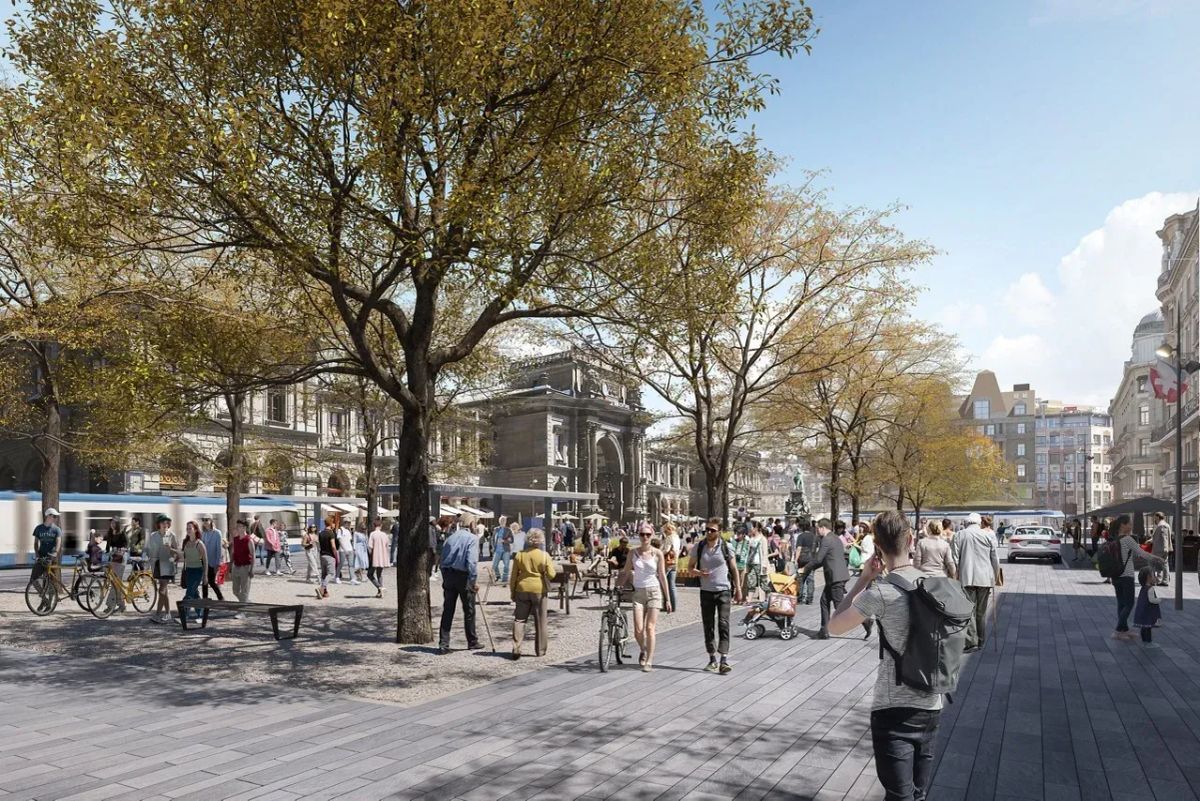
If you have ever tried to cross the road outside Zürich's Hauptbahnhof on foot and felt like an afterthought, the city's transport planners would like you to know they agree with you. After 12 years of development, the city council has published and won parliamentary approval for a 165-page blueprint — the "Weissbuch" — setting out how one of Europe's busiest transit hubs should be reshaped by 2050. The central argument is straightforward: the space around the HB has been gradually handed over to cars for decades, and it is time to take it back.
The numbers give some sense of the scale involved. Around 700,000 people pass through the HB area on foot every single day. By 2050 that figure is projected to reach 900,000. The city's transport commissioner Simone Brander described the current situation as a "clogged artery around Zürich's heart" — a system designed for a different era, struggling visibly under the demands being placed on it. The vision the White Paper sets out would make pedestrians the dominant users of the space around the station building, reroute cyclists away from the Bahnhofplatz and along dedicated alternatives through Beatengasse and Schweizergasse, and transform Uraniastrasse from what the document bluntly calls a "four-lane inner-city motorway" into a calmer cycling and pedestrian route. A new tram line along Neumühlequai — long discussed, never built — also features in the plans.
A Familiar Political Divide
The debate in the city parliament last Wednesday followed a predictable trajectory. FDP councillor Andreas Egli called the document "a masterclass in political marketing" masking what he saw as a straightforward anti-car agenda. His SVP colleague Stephan Iten went further, expressing open bewilderment that anyone would want to turn one of the city's most important transport junctions into what he described as a "recreation zone." His parting shot as the cycling motions were approved — "now you want to ruin the last bright spot for drivers too" — drew the battle lines clearly enough.
On the other side, SP and Green councillors argued that SVP and FDP had simply not caught up with where urban transport priorities need to be heading. With pedestrian volumes growing and the physical space fixed, they contended that continuing to accommodate cars at current levels was no longer rational.
One practical complication loomed over the entire debate: most of the roads surrounding the HB fall under cantonal rather than city jurisdiction. The canton was not a signatory to the White Paper, though its technical departments were involved in the planning process. Without cantonal cooperation, the city's ability to implement its own vision is significantly constrained — a point the sceptics were quick to make.
The parliament approved the White Paper and passed several accompanying motions to the city council for further development, including the Neumühlequai tram line and a restructuring of the tunnel under Bahnhofquai to separate cycling and car traffic. None of it will happen quickly. The document is explicitly framed as a first step on a long road — but for a city that spent 12 years writing the plan, that may be an understatement.